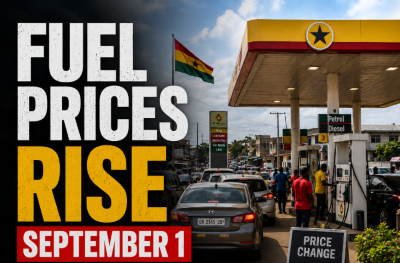
Fuel prices in Ghana could rise from September 1, 2026, after the National Petroleum Authority (NPA) increased the price floors for petrol and diesel for the next pricing window, while the benchmark for LPG has been reduced.
Under the new pricing window covering September 1 to September 16, the NPA has raised the price floor for petrol from GH¢13.92 to GH¢14.53 per litre, representing an increase of about 4.38 per cent. The diesel price floor has also increased from GH¢15.19 to GH¢15.60 per litre, a rise of about 2.69 per cent.
LPG is moving in the opposite direction. Its price floor has been reduced from GH¢10.98 to GH¢10.85 per kilogramme.
The new figures mean motorists and businesses are entering September with renewed uncertainty over what they will actually pay at filling stations.
Fuel prices rise as NPA sets new September floor
The latest NPA review means the benchmark used by Oil Marketing Companies (OMCs) to determine their pump prices will be higher for petrol and diesel during the first half of September.
However, the NPA price floor does not automatically mean every filling station will increase its prices by exactly the same amount.
The regulator’s floor is the minimum price at which the products can be sold during the relevant pricing window. Actual pump prices can vary depending on factors including company margins and other market considerations.
This distinction will be important for consumers because some OMCs may decide to absorb part of the increase or maintain their existing pump prices in response to competition.
Fuel Prices Set to Rise From September 1; New Prices Out
The new petrol floor of GH¢14.53 per litre represents a return to the benchmark used during the first August pricing window.
Petrol had subsequently fallen to GH¢13.92 for the second half of August before the latest increase announced for September.
The movement means motorists are once again facing upward pressure on petrol prices after enjoying a lower regulatory floor during the second half of August.
For drivers who use their vehicles frequently, even relatively small changes in pump prices can translate into significant additional monthly fuel expenditure.
Diesel price also increases
Diesel has also recorded an increase under the new pricing window, although the adjustment is smaller than the increase recorded for petrol.
The diesel floor moves from GH¢15.19 to GH¢15.60 per litre, representing an increase of 41 pesewas per litre.
The development will be closely watched by commercial drivers, transport companies, businesses and industries that rely heavily on diesel-powered vehicles and equipment.
Diesel costs can have a wider effect on the economy because it is used extensively for commercial transportation, logistics, generators and other business activities.
LPG gets a price reduction
While petrol and diesel are becoming more expensive at the regulatory-floor level, LPG is receiving a slight reduction.
The NPA has cut the LPG price floor from GH¢10.98 to GH¢10.85 per kilogramme, a reduction of 13 pesewas.
The reduction could provide some relief to households and businesses that use LPG for cooking, although the actual price consumers pay will depend on individual marketers and other applicable margins.
The contrasting movements in the three petroleum products reflect the different market conditions feeding into the NPA’s pricing review.
Will fuel actually become more expensive?
Not necessarily by the full amount of the new price-floor adjustments.
Joy Business reports that some OMCs have indicated that pump prices could remain unchanged from September 1, although companies will make their own pricing decisions based on competition and market conditions.
This means consumers should watch the prices announced by individual OMCs rather than assuming that every station will immediately charge GH¢14.53 for petrol or GH¢15.60 for diesel.
The NPA figures are therefore best understood as regulatory price floors, rather than guaranteed retail prices.
What happens to the diesel subsidy?
Another issue attracting attention is the government’s temporary intervention on diesel prices.
On August 3, the government announced that it would absorb GH¢2 of the price of diesel at the pumps for one month as part of an effort to cushion consumers from rising fuel costs.
Energy and Green Transition Minister John Jinapor had indicated that the intervention was for August and would be reviewed before a decision was taken on whether to continue it.
It is therefore not yet clear from the latest NPA notice whether the same level of government support will continue into September.
Transport fares and prices remain a concern
Any significant increase in fuel prices can have consequences beyond the filling station.
Higher fuel costs can raise the operating expenses of commercial transport operators, delivery companies, manufacturers and businesses that depend on road transportation.
Those additional costs can eventually feed into transport fares and the prices of goods and services if businesses pass the increases on to consumers.
This is why fuel-price reviews are closely followed by households, traders and businesses across Ghana.
Global oil market remains important
Ghana’s domestic fuel prices are influenced by international petroleum market conditions, the exchange rate and the country’s deregulated petroleum pricing framework.
Previous fuel-price increases have been linked by industry players to movements in international petroleum product prices and exchange-rate developments.
Consequently, the direction of global oil prices and the cedi will remain important factors in determining what motorists pay during subsequent pricing windows.
Fuel Prices Set to Rise From September 1; See New Prices and Other Key details at a glance
- New petrol floor: GH¢14.53 per litre.
- Previous petrol floor: GH¢13.92.
- New diesel floor: GH¢15.60 per litre.
- Previous diesel floor: GH¢15.19.
- New LPG floor: GH¢10.85 per kilogramme.
- Previous LPG floor: GH¢10.98.
- New pricing window: September 1–16, 2026.
- Actual pump prices may differ between OMCs.
FAQ
Will petrol prices increase from September 1?
They could increase, because the NPA has raised the petrol price floor to GH¢14.53 per litre. However, the actual pump price will depend on individual OMC pricing decisions.
How much will diesel cost from September 1?
The new NPA price floor for diesel is GH¢15.60 per litre, up from GH¢15.19. This is a regulatory floor and not necessarily the exact price every filling station will charge.
Is LPG also increasing?
No. The LPG price floor has actually fallen from GH¢10.98 to GH¢10.85 per kilogram for the new pricing window.
The latest fuel price review puts motorists and businesses on alert ahead of September. While the NPA’s new floors do not guarantee an identical increase at every filling station, petrol and diesel are now facing higher regulatory benchmarks. Consumers will therefore be watching OMCs closely as the September 1 pricing window approaches.
More trending news on GhanaTrends
External authority: MyJoyOnline fuel-price report