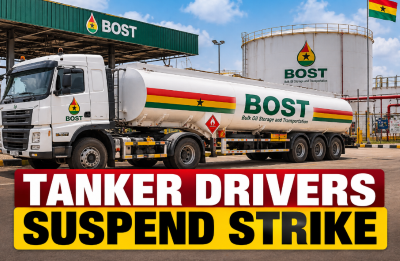
The Kumasi tanker drivers strike has been suspended after the Ghana National Petroleum Tanker Drivers Union (GNPTDU) reached an agreement with BOST Energies Limited to address concerns surrounding operations at the company’s Kumasi depot. Citi Newsroom reported the development on Monday, August 17, 2026.
The dispute had raised concerns over the smooth lifting and distribution of petroleum products from the Bulk Oil Storage and Transportation (BOST) facility in Kumasi. The tanker drivers’ action was linked to grievances over conditions at the depot, making the development significant for Ghana’s downstream petroleum supply chain.
The suspension followed discussions between the union and BOST management, resulting in an agreement on measures intended to address the drivers’ concerns. Citi Newsroom listed the suspension among its latest Ghana news developments on Monday.
Kumasi tanker drivers strike puts fuel supply in focus [More Details]
The importance of the dispute goes beyond the drivers themselves because tanker trucks form an important part of Ghana’s petroleum distribution network.
Fuel lifted from petroleum storage facilities must be transported to various parts of the country for onward distribution to filling stations and other consumers. Any prolonged disruption at a major depot can therefore raise concerns about delays in deliveries, particularly if alternative transportation arrangements cannot immediately compensate.
The Kumasi depot is particularly important for the distribution of petroleum products into the middle and northern parts of Ghana.
Previous disputes involving tanker drivers have demonstrated how industrial action in the petroleum haulage sector can quickly become a national concern.
In 2024, for example, the Ghana National Petroleum Tanker Drivers Union declared a nationwide strike over the implementation of conditions-of-service arrangements. The Ghana News Agency reported at the time that the union represented thousands of drivers and mates operating across several petroleum depots.
What triggered the latest dispute?
The latest industrial action centred on concerns raised by tanker drivers regarding conditions at the BOST Kumasi facility.
Citi Newsroom reported that the drivers declared a three-day sit-down strike before reaching an agreement with BOST Energies. The subsequent suspension means the immediate threat of continued disruption has been reduced.
The specific implementation timetable for every measure agreed between the union and BOST should, however, be treated carefully until the full agreement or an official statement from the parties is made public.
Why the BOST dispute matters to motorists
For ordinary motorists, the biggest concern surrounding a tanker-driver strike is whether it could eventually affect fuel availability.
A stoppage does not automatically mean that filling stations will run out of petrol or diesel. Fuel supply depends on existing stocks, alternative distribution routes, depot inventories and the duration of the industrial action.
In this case, the three-day action was suspended following the BOST agreement, reducing the immediate risk of a prolonged disruption.
The development also highlights the importance of working conditions and infrastructure within Ghana’s petroleum transportation system.
The National Petroleum Authority has previously acknowledged safety and welfare concerns involving fuel tanker drivers. In June 2026, the NPA received an ultra-modern tanker drivers’ rest stop and park at the BOST Kumasi Depot, an initiative intended to improve driver welfare and road safety.
A wider safety issue
The petroleum haulage industry carries particular risks because drivers transport highly flammable products over long distances.
Poor depot conditions, inadequate rest facilities and difficult access roads can potentially create operational and safety challenges.
The NPA has previously highlighted the need to improve safety in the downstream petroleum sector, including addressing risks associated with tanker operations.
That makes the resolution of disputes involving tanker drivers relevant not only to fuel distribution but also to road safety and the wider petroleum supply chain.
What happens after the strike suspension?
The immediate priority will be whether BOST and the GNPTDU implement the measures agreed during their discussions.
The suspension provides an opportunity for both sides to resolve the outstanding issues without allowing another disruption to develop.
For fuel consumers, the key issue will be whether petroleum distribution continues normally from the Kumasi depot and whether the agreement prevents another industrial action in the near future.
At this stage, there is no verified evidence in the sources reviewed that the strike has caused a nationwide fuel shortage. GhanaTrends should therefore avoid headlines suggesting that petrol stations are running out of fuel unless an authoritative source confirms such a development.
Kumasi Tanker Drivers Suspend Strike After BOST Deal – Key details at a glance
- Issue: Kumasi tanker drivers’ strike
- Union: Ghana National Petroleum Tanker Drivers Union
- Facility: BOST Kumasi Depot
- Duration announced: Three days
- Latest development: Strike suspended
- Reason for suspension: Agreement reached with BOST
- Main concern: Conditions surrounding tanker operations at the depot
- Potential impact: Petroleum product distribution
- Date: Monday, August 17, 2026
FAQ on Story: Kumasi Tanker Drivers Suspend Strike After BOST Deal
Why did Kumasi tanker drivers go on strike?
The drivers embarked on a three-day sit-down strike over concerns regarding conditions at the BOST Kumasi depot, according to Citi Newsroom.
Have Kumasi tanker drivers ended the strike?
Yes. Citi Newsroom reports that the drivers suspended the industrial action after reaching an agreement with BOST Energies Limited.
Will the strike cause a fuel shortage in Ghana?
There is currently no verified evidence that the suspended strike has caused a nationwide fuel shortage. Any claim of fuel shortages should be confirmed with BOST, the NPA or another authoritative petroleum-sector source before publication.
The suspension of the Kumasi tanker drivers’ strike removes an immediate threat to petroleum distribution from the BOST facility, but attention will now turn to whether the agreement reached with management produces a lasting solution to the drivers’ concerns.
More news on GhanaTrends Ghana News
Other Sources: Citi Newsroom