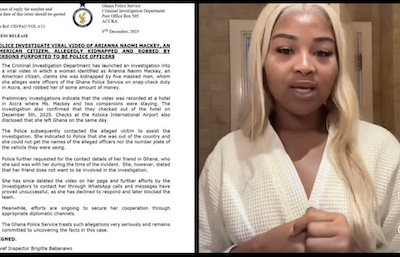
In a surprising turn of events, the Ghana Police Service has initiated a formal investigation through its Criminal Investigation Department (CID) following a widely circulated video by American visitor Arianna Naomi Mackey.
In the clip, Mackey claimed she was abducted and robbed by five masked individuals pretending to be police officers during a routine checkpoint in Accra. Authorities emphasized in their December 9, 2025, statement that preliminary reviews show no signs of actual police participation, raising questions about the incident’s legitimacy.
Visiting for Detty December in Accra Ghana? At least watch these viral videos

Mackey reportedly captured the footage from her hotel room in Accra shortly before her departure from the country on December 5. After the video gained traction online, she removed it from her platforms, restricted access to her TikTok account, and ceased communication with Ghanaian investigators. This abrupt withdrawal has complicated the inquiry, prompting officials to pursue assistance through diplomatic ties with the United States to encourage her cooperation.
Ghana Police Statement: U.S. Tourist’s Viral Kidnapping Claim in Accra
PRESS RELEASE:
POLICE INVESTIGATE VIRAL VIDEO OF ARIANNA NAOMI MACKEY, AN AMERICAN CITIZEN, ALLEGEDLY KIDNAPPED AND ROBBED BY PERSONS PURPORTED TO BE POLICE OFFICERS pic.twitter.com/Q7M5kP8K6n
— Ghana Police Service (@GhPoliceService) December 9, 2025
Further scrutiny has emerged from additional online clips depicting Mackey at a high-end Accra hotel, where she appeared to discuss compensated content creation focused on promoting Ghana. These revelations have fueled widespread online debates, with many users questioning whether the kidnapping narrative was fabricated for attention or other motives. Critics argue that such unverified stories could deter international visitors and undermine trust in local law enforcement.
The police service’s response highlights their commitment to transparency and safeguarding Ghana’s image as a safe destination. By launching this probe, they aim to uncover the truth and address any potential misinformation that might harm the nation’s tourism sector. Experts note that in an era of social media, distinguishing real threats from sensationalized tales is increasingly vital for public safety and economic stability.
As the investigation unfolds, stakeholders in Ghana’s hospitality industry are monitoring developments closely, hoping for a swift resolution. This case underscores the broader challenges of digital storytelling and its real-world repercussions, reminding travelers and content creators alike of the importance of accountability in sharing experiences abroad.