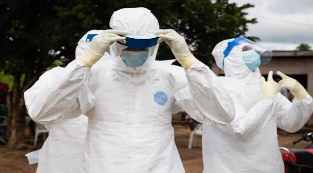
Ghana’s Ministry of Health has strengthened Ebola surveillance and screening at the country’s points of entry, especially the airport in Accra, after Nigeria confirmed an Ebola case on October 20, 2026 and Kenya recorded a cluster of cases this month. The ministry said on Wednesday, October 21, that Ghana has not recorded any Ebola case.
The statement, signed by Health Minister Kwabena Mintah Akandoh and shared by the ministry’s Public Relations Officer, Tony Goodman, said the situation in Kenya and Nigeria poses a significant risk to Ghana because of direct flights, high passenger traffic and frequent travel between the countries.
Travellers arriving from affected areas will now have their health monitored for 21 days, the maximum incubation period of the virus.
The Ghana Health Service and other agencies are leading the response, working with the Ghana Airports Company Limited and the Ghana Civil Aviation Authority.
Why Ghana is stepping up Ebola screening now
The ministry said Kenya reported an imported Ebola case caused by the Bundibugyo virus on October 6, 2026. By October 17, six more cases linked to the first had been confirmed there, including infections among healthcare workers.
Nigeria then confirmed a case in its Federal Capital Territory, Abuja, on October 20. The ministry singled out Kenya, noting that direct flights and passenger volumes between Kenya and Ghana are higher than those from the Democratic Republic of the Congo (DRC), where the outbreak started.
“This has necessitated strengthening existing surveillance and screening measures, especially at the airport,” the minister said.
Nigeria Ebola case: what we know
According to the World Health Organization (WHO), the Nigerian patient is a woman who had recently travelled to Uganda. She developed symptoms on October 7 and sought treatment at a private health facility in Abuja on October 11.
Laboratory tests confirmed the Bundibugyo virus infection on October 20. She is in isolation and receiving care, and 44 contacts have been identified and placed under monitoring.
Nigeria is the fifth country to detect the virus since the DRC declared the outbreak on May 15, 2026. WHO has urged countries in the region to strengthen surveillance but advised against travel and trade restrictions on affected countries.
Ebola outbreak timeline in figures
- May 15, 2026: DRC declares the Bundibugyo Ebola outbreak
- October 6, 2026: Kenya reports an imported case
- October 17, 2026: Kenya confirms six additional linked cases, including health workers
- October 20, 2026: Nigeria confirms a case in Abuja; 44 contacts under monitoring
- October 21, 2026: Ghana announces tighter screening; zero cases recorded in Ghana
Ebola prevention measures at Ghana’s entry points
The Ministry of Health listed the following steps being taken to keep the virus out of the country:
- Enhanced surveillance and screening at points of entry, especially the airport
- Simulation exercises at the Accra airport and the Ghana Infectious Disease Centre
- Monitoring of travellers from high-risk areas for 21 days
- Updated laboratory standard operating procedures and improved lab preparedness
- Sensitisation of healthcare workers on handling suspected cases
- Public education and risk communication at the airport
The measures build on the preparedness steps the health minister outlined earlier in the year, when WHO declared the Ebola outbreak an emergency.
Ebola symptoms and how the virus spreads
The ministry said the incubation period is 2 to 21 days, with an average of 8 to 10 days. Early signs include high fever, severe headache, extreme fatigue, sore throat and chills.
Later signs may include unexplained bleeding and confusion. The virus spreads through direct contact with the blood or body fluids of an infected person, or with contaminated materials. The ministry stressed that it is not airborne.
More background on the disease is available from the World Health Organization’s Ebola fact sheet.
What it means for travellers and the public in Ghana
Passengers arriving from affected countries should expect screening at the airport and follow-up monitoring for 21 days after arrival.
Anyone who develops symptoms after travelling to an affected area, or after contact with a suspected or confirmed case, should seek medical care promptly and disclose their travel history.
The ministry urged the public to stay calm, practise good hand hygiene, avoid contact with anyone showing unexplained fever, vomiting, diarrhoea or bleeding, and rely only on official updates rather than spreading unverified information.
What happens next
Health authorities say surveillance will continue at points of entry while the outbreak remains active in the DRC, Kenya and Nigeria. The ministry has promised to keep the public informed through official channels.
In Nigeria, contact tracing and investigation into the source of infection are ongoing, with WHO support.
Sneakpeak into the story
- Ghana has recorded zero Ebola cases as of October 21, 2026
- Nigeria confirmed a Bundibugyo virus case in Abuja on October 20; 44 contacts are being monitored
- Kenya’s first imported case was reported on October 6, with six linked cases by October 17
- Travellers from affected areas will be monitored for 21 days in Ghana
- Screening has been stepped up at the Accra airport and other entry points
- Ebola is not airborne; it spreads through contact with body fluids
- Statement signed by Health Minister Kwabena Mintah Akandoh
FAQs: Ebola: Ghana Steps Up Airport Screening, 21-Day Traveller Monitoring After Nigeria, Kenya Confirm Cases
Is there Ebola in Ghana now?
No. The Ministry of Health said on October 21, 2026 that Ghana has not recorded any Ebola case, but it has tightened screening as a precaution.
Which countries have Ebola cases in October 2026?
The outbreak began in the DRC and has spread to other countries, with Kenya reporting cases from October 6 and Nigeria confirming a case in Abuja on October 20. WHO says Nigeria is the fifth country to detect the virus since May.
What are the early symptoms of Ebola?
Early symptoms include high fever, severe headache, extreme fatigue, sore throat and chills. Later signs can include unexplained bleeding and confusion.
Ghana remains Ebola-free, but with confirmed cases now in Nigeria and Kenya, the Ministry of Health is stepping up airport screening, 21-day traveller monitoring and laboratory readiness, while urging the public to stay calm, observe hygiene and report symptoms early.