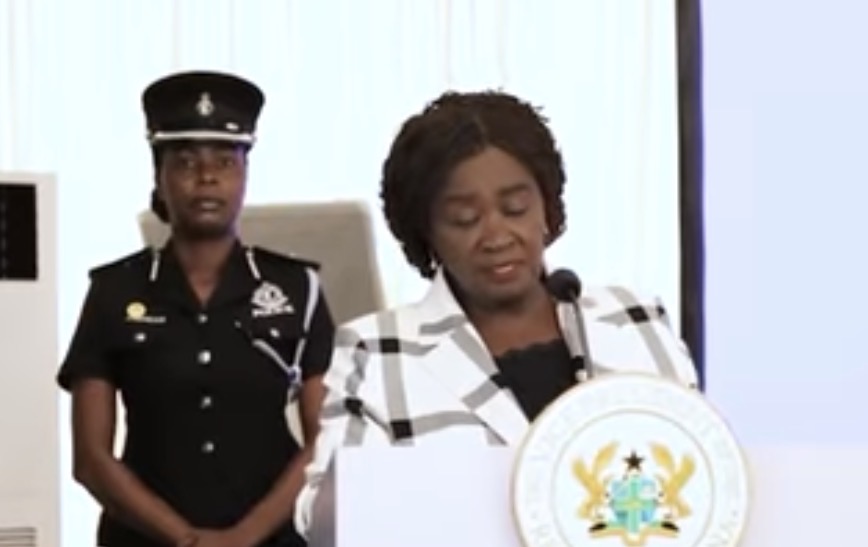
The vice President, Prof. Naana Jane Opoku-Agyemang calls for a reset in Ghana’s relationship with the International Monetary Fund (IMF) during a meeting with the IMF country and regional representatives in Africa on Tuesday, 20th January, 2026 held in Accra.
Speaking at the meeting, Prof. Naana Jane Opoku-Agyemang said the country’s improving economic conditions justify a reset in how Ghana relates to the global financial institution. For this reason, Ghana is calling for a fundamental shift in its engagement with the International Monetary Fund (IMF), moving away from emergency financial support toward a more balanced and strategic partnership.
According to her Ghana’s economy has shown notable signs of recovery, including single-digit inflation, a more stable cedi, and stronger gross domestic product (GDP) growth.
Prof. Opoku-Agyemang attributed these gains to difficult but necessary reforms led domestically, stressing that national ownership of economic policies has been key to restoring stability. She argued that this progress should now form the foundation for a development-oriented relationship with the IMF rather than one defined solely by crisis intervention.
Ghana Seeks New Economic Partnership Model with IMF – Prof. Jane Naana Opoku-Agyemang

She also highlighted Africa’s growing capacity to shape its own economic future, pointing to regional initiatives such as the African Continental Free Trade Area (AfCFTA). While global partnerships remain important, she said African countries are increasingly positioned to drive sustainable growth through trade integration and stronger institutions.
For us, the true measure of success is not only compliance with the program but the restoration of confidence and policy autonomy. Stability, in our experience cannot be imported; it must be built through discipline, institutions and public confidence” she stated.
The Vice President emphasized that true economic success goes beyond meeting IMF program targets. She noted that rebuilding investor confidence, strengthening institutions, and maintaining policy independence are critical for long-term stability, adding that while IMF programs can be challenging, discipline and credibility remain essential during periods of economic stress.