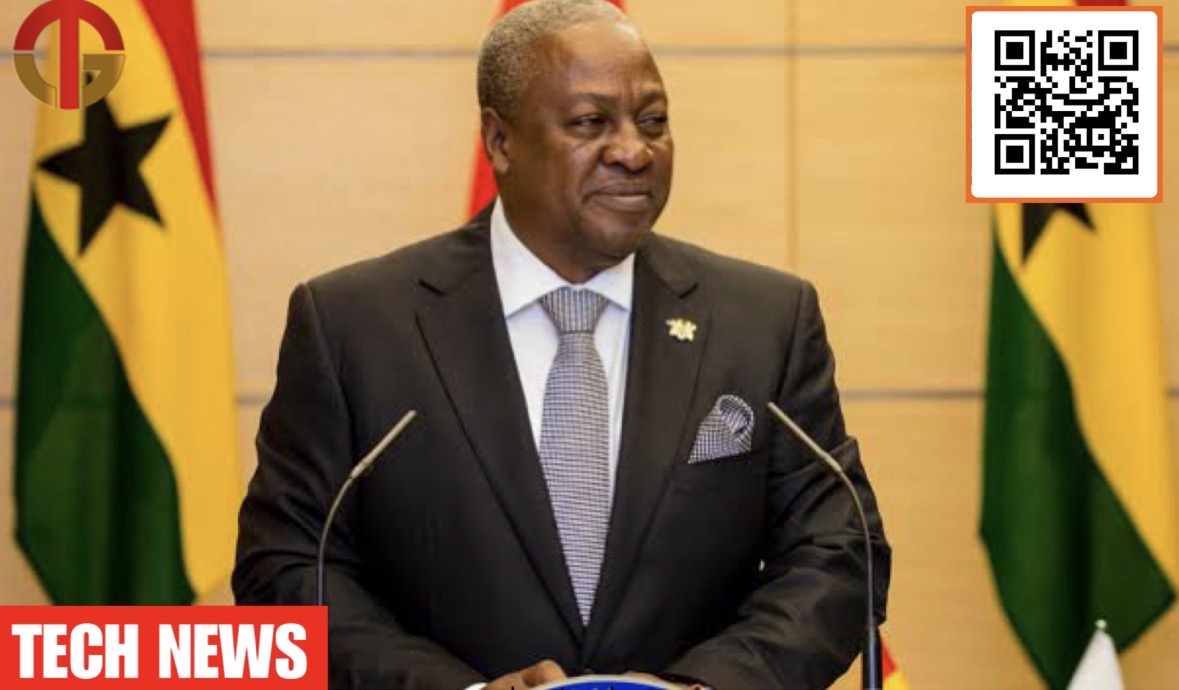
President John Dramani Mahama has officially signed the Virtual Asset Service Providers Bill into law, establishing a comprehensive framework for regulating cryptocurrencies and virtual assets.
This development, announced on December 30, 2025, marks a significant step toward integrating digital currencies into the nation’s economy while addressing concerns over unregulated activities. The legislation aims to foster innovation in the fintech sector, positioning Ghana as a forward-thinking player in Africa’s growing digital economy.
The bill, which received parliamentary approval earlier in December 2025, comes at a time when cryptocurrency adoption has surged across Ghana. Prior to this law, the use of virtual assets operated in a legal gray area, leading to risks such as fraud and money laundering.
By legalizing the trading, usage, and service provision related to cryptocurrencies, the government seeks to create a safer environment for investors and businesses. This move aligns with global trends where nations are increasingly formalizing crypto regulations to balance growth with security.
[X Post] Ghana’s President Mahama Ushers in New Era with Cryptocurrency Regulation Law
🫵🏾 President John Mahama pic.twitter.com/PS1x9bWBNm
— Luda Brown (@GEORJAMEZ) December 30, 2025
Under the new law, virtual asset service providers, including exchanges and wallet services, must obtain licenses from regulatory authorities like the Bank of Ghana. This requirement ensures compliance with anti-money laundering protocols and consumer protection standards. Individuals can now legally buy, sell, and hold cryptocurrencies without fear of prosecution, provided they adhere to the guidelines. The framework also includes provisions for taxation and reporting, which could generate new revenue streams for the government.
The Bank of Ghana has welcomed the legislation, viewing it as a crucial tool to mitigate risks associated with the unregulated spread of digital currencies. Governor’s office statements highlight how the law addresses previous concerns about financial stability and illicit transactions. Industry experts believe this will attract international investments, as Ghana joins countries like Nigeria and South Africa in embracing crypto-friendly policies.
For Ghana’s economy, the regulation of cryptocurrencies could boost financial inclusion, especially in underserved rural areas where mobile money and digital wallets are already popular. It may encourage startups in blockchain technology and decentralized finance, potentially creating jobs and stimulating innovation. However, critics argue that the law must be implemented carefully to avoid stifling small-scale traders who rely on informal crypto networks.
Challenges ahead include building regulatory capacity and educating the public on safe practices. The government plans to roll out awareness campaigns and collaborate with international bodies to refine the framework. Enforcement will be key, with penalties for non-compliant entities to deter violations.
Looking forward, this law positions Ghana as a hub for virtual assets in West Africa, potentially enhancing cross-border trade and remittances through blockchain. As the global crypto market evolves, Ghana’s proactive stance could yield long-term economic benefits, signaling a commitment to technological advancement under President Mahama’s leadership.