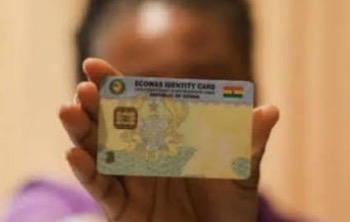
The National Identification Authority (NIA) will begin a nationwide crackdown on the photocopying and visual inspection of Ghana Cards from Monday, November 2, 2026, with institutions that break the rules facing fines of between GH¢6,000 and GH¢24,000.
The enforcement will be carried out by the NIA’s Biometric Verification Taskforce under the National Identity Register (Amendment) Regulations, 2026 (L.I. 2523). Under the regulations, photocopying or visually inspecting a Ghana Card for the purpose of a transaction is a criminal offence.
Instead, institutions must verify a person’s identity through the NIA Identity Verification System Platform (IVSP), which matches fingerprints or other approved biometric data against the National Identity Register.
The NIA says there are no exemptions and has urged every institution that verifies identities to onboard onto the platform immediately to avoid prosecution.
Ghana Card photocopying ban: what is now illegal
From November 2, institutions may no longer accept a photocopy of a Ghana Card, or simply look at the card, as proof of identity for a transaction.
Verification must be done biometrically through the IVSP. Approved match-on-card devices may also be used.
The NIA has warned that institutions “must comply with the new requirements or risk enforcement action.”
Ghana Card photocopying fines under L.I. 2523
Offenders will be tried by summary procedure. Using the value of GH¢12 per penalty unit, the fines are:
- Institutions/corporate entities: 500 to 2,000 penalty units – GH¢6,000 to GH¢24,000
- Individuals: 50 to 500 penalty units – GH¢600 to GH¢6,000
- Value of one penalty unit: GH¢12
- Exemptions: None, according to the NIA
Why the NIA is banning Ghana Card photocopies
The NIA says the move is meant to tackle identity theft, fraudulent transactions and the misuse of personal information.
According to the Authority, photocopies and scanned images of the card can be altered, duplicated, or kept and used “without the cardholder’s knowledge.” Biometric checks confirm that the person presenting the card is the actual owner.
Government earlier granted a transition period to give institutions time to acquire equipment, integrate their systems and train staff, a point explained by Interior Minister Muntaka Mohammed-Mubarak. That window has now closed.
Which institutions are affected by the NIA biometric verification rule
The rule covers any public or private institution that verifies identity using the Ghana Card. Those expected to be most affected include:
- Banks and other financial institutions
- Telecommunications companies
- Insurance firms
- Hospitals
- Schools
- Government agencies
What the ban means for Ghana Card holders
For ordinary card holders, the change means a bank, telco or hospital should no longer ask to keep a photocopy of their Ghana Card. Instead, they may be asked to place a finger on a scanner so their identity can be checked against the national register.
The NIA says this should reduce the risk of copies of people’s cards circulating and being used for fraud without their knowledge. Individuals who breach the regulations can also be fined between GH¢600 and GH¢6,000.
The enforcement comes in the same week that other new rules took effect, including the TraffiTech-GH camera fines that led drivers to threaten a nationwide strike from November 1.
What happens next for institutions
The taskforce begins full nationwide enforcement on Monday. Institutions that have not yet joined the platform can start the process through the National Identification Authority website or by emailing [email protected].
The NIA has not yet said how the taskforce will carry out its checks or how many institutions have already been onboarded.
Key details at a glance
- Ghana Card photocopying and visual inspection for transactions banned from November 2, 2026
- Enforced by the NIA Biometric Verification Taskforce
- Legal basis: National Identity Register (Amendment) Regulations, 2026 (L.I. 2523)
- Institutions face fines of GH¢6,000 to GH¢24,000
- Individuals face fines of GH¢600 to GH¢6,000
- Verification must be done through the NIA Identity Verification System Platform (IVSP)
- No exemptions, according to the NIA
FAQs
Is it illegal to photocopy the Ghana Card?
Yes. From November 2, 2026, photocopying or visually inspecting a Ghana Card for a transaction is a criminal offence under L.I. 2523. Institutions must use biometric verification instead.
What is the fine for photocopying a Ghana Card?
Institutions face fines of 500 to 2,000 penalty units (GH¢6,000 to GH¢24,000), while individuals face 50 to 500 penalty units (GH¢600 to GH¢6,000).
How do institutions join the NIA verification platform?
Institutions can begin onboarding onto the Identity Verification System Platform through www.nia.gov.gh or by emailing [email protected].
From Monday, the Ghana Card can no longer be photocopied or simply eyeballed as proof of identity. With the NIA taskforce set to enforce L.I. 2523 nationwide and fines of up to GH¢24,000 for institutions, banks, telcos, hospitals, schools and state agencies must switch to biometric verification or risk prosecution.