Ghana’s 24-Hour Economy programme has secured approximately US$5.5 billion in project commitments, with the government saying the initiative is increasingly being driven by private-sector investment rather than direct government financing.
The announcement comes about a year after President John Dramani Mahama’s administration launched the 24-Hour Economy and Accelerated Export Development Programme, one of its flagship economic policies aimed at increasing domestic production, expanding exports and creating jobs.
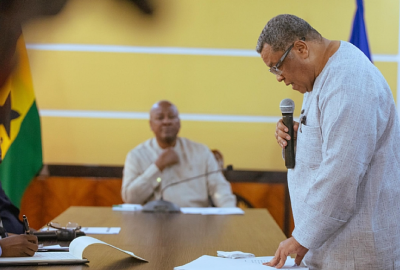
Presidential Adviser on the 24-Hour Economy, Augustus Goosie Tanoh, disclosed the latest investment figure during a media engagement in Accra. He said the programme’s implementation would depend substantially on private investors, while government focuses on creating the conditions needed for businesses to operate and expand.
24-Hour Economy secures $5.5bn in commitments
According to the latest figures, the 24-Hour Economy has secured $5.5 billion in project commitments since the programme began its implementation phase.
The figure is significant because the programme was designed around the idea of moving Ghana away from an economy heavily dependent on imports and the export of raw materials towards one based more strongly on domestic production and value addition.
Earlier figures released by the 24-Hour Economy Secretariat showed that the US$5.5 billion agreements formed part of a broader project pipeline valued at approximately US$11.5 billion. Four projects within the pipeline were expected to create more than 160,000 direct jobs.
The programme’s broader target is to create about 1.7 million jobs by the end of 2028.
Private sector expected to lead investment
A major feature of the programme is the government’s decision not to rely primarily on public money to finance the projects.
The 24-Hour Economy Secretariat has said almost all the projects are being funded by private investors, including Ghanaian and foreign companies and cooperatives. Government funding is intended mainly for project preparation, viability-gap support and coordination.
This approach means the success of the programme will depend heavily on whether the announced investment commitments translate into actual construction, production, employment and exports.
The distinction between project commitments and completed investments will therefore remain important as the programme progresses.
What projects are under the 24-Hour Economy?
Several major projects have already been associated with the programme.
Among them is the US$1.45 billion Buipe Solar and Battery Project, which the Secretariat says is expected to generate 1,500 megawatts of electricity and create about 13,000 jobs when completed. The project is expected to generate power at between six and nine US cents per kilowatt-hour.
Another project is the US$250 million Kambonwule oil palm complex, which is expected to produce approximately 228,000 tonnes annually and create about 120,000 jobs, according to the Secretariat.
A bioenergy programme covering Buipe and Damanko is also projected to create about 30,000 jobs while helping reduce Ghana’s foreign-exchange expenditure and generate export earnings.
268 filling stations already operating in shifts
The programme has also moved into the downstream petroleum sector.
The Secretariat previously reported that 12 oil marketing companies were providing 24-hour services across 268 filling stations, while 33 manufacturing companies had started operating multi-shift systems.
The development is intended to demonstrate how extending operating hours can increase production, improve the utilisation of industrial assets and create additional employment.
However, questions remain over whether businesses can sustain round-the-clock operations given Ghana’s electricity costs, access to financing and wider operating environment.
Jobs remain the biggest test
For many Ghanaians, the most important measure of the 24-Hour Economy will not simply be the amount of money attached to projects but the number of sustainable jobs ultimately created.
The government has set a target of approximately 1.7 million jobs by the end of 2028, making employment one of the central promises attached to the programme.
That means the implementation of the announced projects will come under increasing scrutiny as the administration seeks to demonstrate that investment commitments are becoming real businesses, factories, farms, energy projects and jobs.
The programme is also expected to support sectors including manufacturing, agro-processing, healthcare, transportation and retail.
Can the 24-Hour Economy transform Ghana?
The latest investment figures give the government an opportunity to argue that the policy is moving beyond its initial political messaging and into practical implementation.
But investment commitments alone do not guarantee economic transformation.
Projects must secure financing, obtain the necessary approvals, begin construction or operations and ultimately produce measurable economic benefits.
The government will therefore face pressure to publish regular updates showing how much of the US$5.5 billion has moved from commitment to actual investment and how many jobs have been created.
Key details at a glance – 24-Hour Economy Secures $5.5bn in Project Commitments
- The 24-Hour Economy has mobilised about US$5.5 billion in project commitments.
- The commitments are described as largely private-sector driven.
- The broader project pipeline is valued at about US$11.5 billion.
- Four projects were expected to create more than 160,000 direct jobs.
- The programme targets 1.7 million jobs by the end of 2028.
- 268 filling stations and 33 manufacturers had commenced multi-shift operations under the programme.
- The Buipe Solar and Battery Project is valued at about US$1.45 billion.
FAQ
How much money has Ghana’s 24-Hour Economy secured?
The programme has mobilised approximately US$5.5 billion in project commitments, according to the Presidential Adviser and figures released by the Secretariat.
How many jobs will the 24-Hour Economy create?
The programme has a broader target of creating 1.7 million jobs by the end of 2028, while four projects already identified were expected to create more than 160,000 direct jobs.
Is the 24-Hour Economy funded by government?
The Secretariat says almost all of the projects are expected to be financed by private investors, with government support focused on project preparation, viability-gap funding and coordination.
The 24-Hour Economy’s US$5.5 billion in project commitments marks an important milestone for President Mahama’s flagship economic programme. The next major test will be implementation: converting commitments into functioning projects, increased production, exports and the millions of jobs promised under the programme.
Other stories in the political trends: GhanaTrends politics
External authority: Graphic Online report and Ghana News Agency report