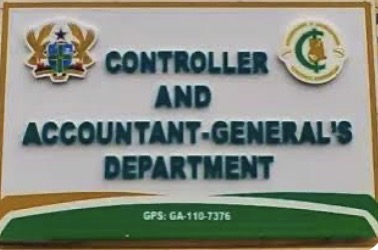
The Ghana Association of Banks (GAB) has warned that its members could suspend new lending to public sector workers on the Controller and Accountant-General’s Department (CAGD) payroll within weeks, citing loan repayments that have been deducted from workers’ salaries but not passed on to banks. GAB Chief Executive Officer John Awuah issued the warning on Thursday, October 8, 2026, at the association’s 43rd Annual General Meeting in Accra.
According to Mr Awuah, the outstanding remittances stretch back three months as of October. He said workers’ salaries are being paid and their loan repayments deducted, but the money is not reaching the lending banks.
“We cannot continue to do this to the industry where salaries are being paid but our loan repayments are not remitted,” he said.
The GAB CEO said banks had planned to take the step about three months ago but held back after intervention from senior officials, including the Chief Director of the Ministry of Finance. He said the delays have persisted despite that intervention.
Banks may suspend lending to all government workers on CAGD payroll
Mr Awuah said banks are “now very hard-pressed” and may take the step of “suspending lending to all government workers” paid through the CAGD.
He said discussions among banks have already taken place and the suspension could be announced in the coming days or weeks if the arrears are not cleared.
No date has been fixed, and no individual bank has been named as taking part. The CAGD has not publicly responded to the threat.
Why banks blame the Controller and Accountant-General’s Department
Salary-backed loans to public sector workers are repaid through deductions made at source on the CAGD payroll. The department is expected to forward those deductions to the banks.
Mr Awuah said banks are taking a hit because “the Controller has refused to do what they have to do.” He said the delays force banks to record “impairments that are completely avoidable,” which eat into their profits.
He described the problem as one that has persisted for more than a decade.
Bank of Ghana’s 10% NPL target adds pressure on banks
The warning comes as the Bank of Ghana pushes commercial banks to bring their non-performing loan (NPL) ratios below 10%.
According to Mr Awuah, Bank of Ghana Governor Dr Johnson Asiamah has directed banks to reach that target by next year. Unremitted deductions on salary loans count against banks’ recovery efforts and make the target harder to meet.
Mr Awuah also cautioned against comparing Ghana’s lending rates with those of neighbouring countries without accounting for differences in their NPL ratios, which he said are among the lowest in the sub-region.
The issue in figures
- Arrears period: about three months of unremitted loan deductions as of October 2026
- Duration of the problem: more than a decade, according to GAB
- Previous suspension plan: shelved about three months ago after government intervention
- Bank of Ghana NPL target: below 10% by next year
- Possible timeline for suspension: within days or weeks
What it means for public sector workers
A suspension would hit public sector employees who rely on salary-backed loans, including teachers, nurses and doctors. Workers seeking new loans from banks could be turned away even though their own repayments are being deducted on time.
Mr Awuah also warned that lending rates could rise as banks reassess the risk of lending to the sector.
The warning adds to pressure on public sector workers, coming as teacher unions remain on strike over arrears. Readers can follow our earlier coverage of the teachers’ strike and the October 16 arrears payment.
What happens next
GAB says it hopes the CAGD will move quickly to clear the outstanding remittances and avoid a suspension.
The association has also been tasked with working with the Bank of Ghana on a framework for the full implementation of the Lenders and Borrowers Act, which is intended to strengthen lending and loan recovery processes.
If the arrears are not settled, banks are expected to announce the suspension in the coming weeks.
Key details at a glance
- The Ghana Association of Banks has threatened to suspend new loans to public sector workers on the CAGD payroll.
- GAB CEO John Awuah made the announcement at the association’s 43rd AGM in Accra on October 8, 2026.
- Banks say loan deductions taken from salaries have not been remitted for about three months.
- A similar plan was shelved earlier after the Ministry of Finance intervened.
- The Bank of Ghana wants banks’ NPL ratios below 10% by next year.
- Teachers, nurses and doctors are among the workers who could be affected.
- The CAGD has not publicly responded.
FAQs
Why are banks threatening to stop loans to public sector workers in Ghana?
Banks say loan repayments deducted from public sector workers’ salaries by the Controller and Accountant-General’s Department have not been passed on to them for about three months.
When will banks suspend loans to government workers?
No date has been set. GAB says the suspension could be announced within days or weeks if the CAGD does not clear the arrears.
Which workers will be affected by the bank loan suspension?
Public sector workers paid through the CAGD payroll, including teachers, nurses and doctors, who apply for new bank loans.
The Ghana Association of Banks says it will no longer wait indefinitely for the Controller and Accountant-General’s Department to remit salary loan deductions. With about three months of arrears outstanding and the Bank of Ghana pressing for lower bad loans, banks say a suspension of new lending to public sector workers could come within weeks unless the CAGD pays up.