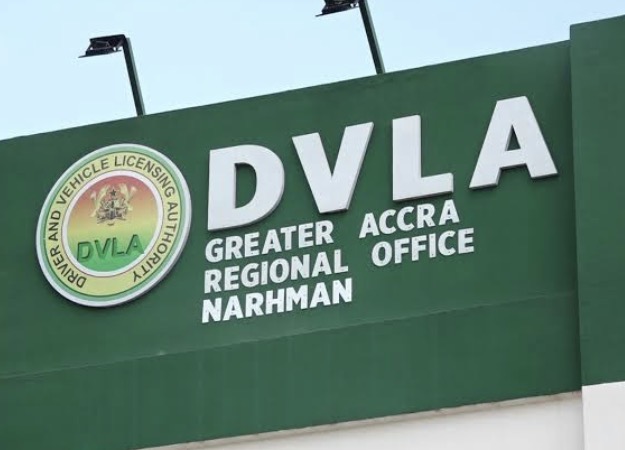
The Driver and Vehicle Licensing Authority (DVLA) says it has renegotiated a service level agreement (SLA) tied to roadworthiness certification, cutting a commitment of US$155.4 million over three years to GH¢2 million for the 2026 to 2028 period. DVLA Chief Executive Julius Neequaye Kotey made the disclosure on Monday, October 12, 2026, at the Government Accountability Series in Accra.
According to Mr Kotey, a review conducted after he took office found SLA commitments of US$51.8 million a year, which added up to US$155.4 million over three years.
The renegotiated arrangement now costs GH¢2 million for 2026 to 2028. Reports of his presentation put the savings at about US$50 million a year.
The DVLA chief said the move forms part of efforts to cut costs and improve the Authority’s financial management.
DVLA roadworthiness SLA cut from US$155.4 million to GH¢2 million
The SLA covers services linked to roadworthiness certificates, which every vehicle must hold to be used legally on Ghana’s roads.
Mr Kotey did not name the service provider in the reports available, and no further breakdown of the new GH¢2 million arrangement has been made public.
The old deal was priced in US dollars, while the new one is in cedis, which means the cost to the Authority is no longer exposed to exchange-rate movements.
Old vs new roadworthiness SLA figures
- Old annual cost: US$51.8 million
- Old three-year commitment: US$155.4 million
- New arrangement: GH¢2 million (2026–2028)
- Reported savings: about US$50 million a year
- Currency: US dollars before, Ghana cedis now
DVLA sanctions vehicle testing stations over poor inspections
At the same event, Mr Kotey said the DVLA had taken punitive action against “a couple” of private vehicle testing stations. Monitoring showed some stations were putting the number of vehicles ahead of the quality of safety checks.
The Authority plans to require testing stations to send inspection images and videos in real time to a DVLA monitoring room, so officials can confirm that required checks were done before roadworthiness stickers are issued.
The DVLA is also engaging stakeholders on upgrading stations’ equipment, diagnostic technology and inspection procedures.
DVLA revenue: GH¢98.1 million paid into Road Fund and Consolidated Fund
Mr Kotey said the DVLA paid GH¢80.4 million into the Road Fund in 2025, which he described as the highest in the Authority’s history. It also paid GH¢17.7 million into the Consolidated Fund, bringing total contributions to GH¢98.1 million.
He also credited the switch from aluminium DP plates to tamper-proof stickers at the ports for plugging revenue leakages.
- 2024: 76,312 DP plates – about GH¢15.4 million
- 2025: 111,101 DP stickers – about GH¢22.4 million
- January–September 2026: 134,361 DP stickers – about GH¢27.1 million
RFID number plates pilot ahead of 2027 rollout
The DVLA chief confirmed that Radio-Frequency Identification (RFID) number plates are being piloted ahead of a nationwide rollout in 2027. He said DVLA staff designed the plates in-house, with “no consultancy fee.”
The plates are expected to link with electronic tolling and traffic enforcement systems being deployed by the Police MTTD. GhanaTrends earlier reported on the start of the DVLA RFID number plate pilot. The DVLA also plans to decentralise number plate embossing to all its regional offices to cut registration delays.
What it means for vehicle owners and taxpayers
For taxpayers, the renegotiated SLA means the DVLA is no longer committed to tens of millions of dollars a year for the roadworthiness service, freeing money that could otherwise flow out of the Authority.
For vehicle owners, the main changes are tighter checks at testing stations. Owners of rickety vehicles may find it harder to obtain roadworthiness stickers once real-time monitoring is in place.
The DVLA has not announced any change in the fee motorists pay for roadworthiness certificates. Current fees are listed on the official DVLA services page.
What happens next
The renegotiated SLA runs from 2026 to 2028. The DVLA is expected to roll out real-time video monitoring at testing stations, though no timeline has been given.
The RFID number plates are scheduled for nationwide rollout in 2027 after the current pilot.
Key details at a glance
- DVLA CEO Julius Neequaye Kotey spoke at the Government Accountability Series on October 12, 2026.
- Roadworthiness-related SLA cut from US$155.4 million (three years) to GH¢2 million for 2026–2028.
- Old deal cost US$51.8 million a year; savings reported at about US$50 million a year.
- “A couple” of vehicle testing stations sanctioned over poor inspections.
- DVLA paid GH¢80.4 million to the Road Fund and GH¢17.7 million to the Consolidated Fund in 2025.
- DP sticker revenue hit about GH¢27.1 million from January to September 2026.
- RFID number plates to be rolled out nationwide in 2027.
FAQs
How much did DVLA save on the roadworthiness deal?
The DVLA cut an SLA worth US$155.4 million over three years to GH¢2 million for 2026–2028, with savings reported at about US$50 million a year.
Has the roadworthy certificate fee changed in Ghana?
No. The DVLA has not announced any change to the fee motorists pay for roadworthiness certificates.
When will DVLA RFID number plates be rolled out?
The DVLA says RFID number plates are being piloted now, with a nationwide rollout planned for 2027.
The DVLA’s renegotiation of its roadworthiness SLA, from US$155.4 million to GH¢2 million, is one of the largest cost cuts announced at the Government Accountability Series so far. Together with sanctions on testing stations, higher Road Fund payments and the RFID plate pilot, Mr Kotey presented it as part of a wider push to tighten the Authority’s finances and improve vehicle safety checks.