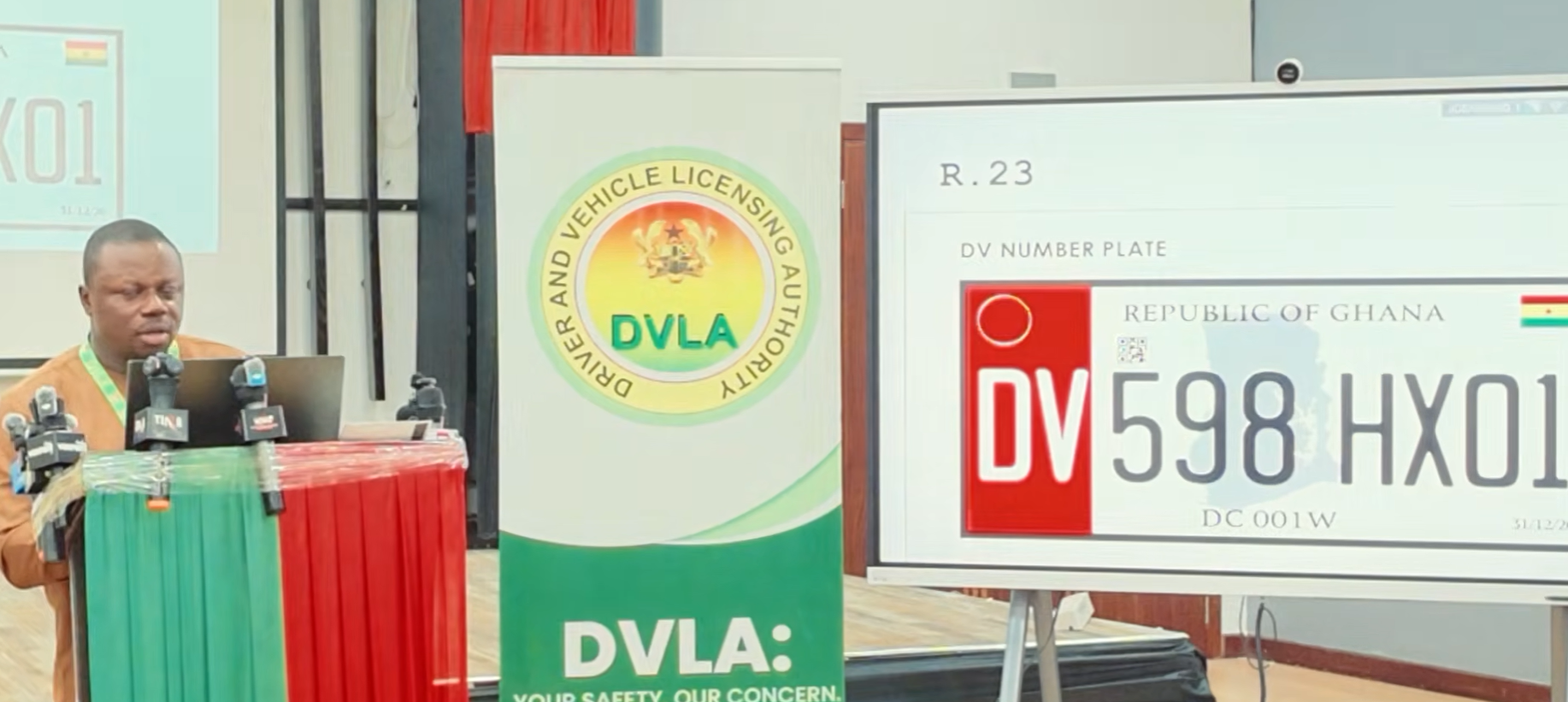
The Driver and Vehicle Licensing Authority (DVLA) has started a pilot of new Radio Frequency Identification (RFID)-enabled vehicle number plates, with official issuance set to begin in January 2027, starting with unregistered vehicles.
The Authority announced the pilot on Tuesday, September 29, 2026, describing it as a significant step towards “a more secure, technology-driven and tamper-resistant vehicle identification system.”
The pilot is being carried out on selected vehicles before the new plates are rolled out nationwide. Re-registration of vehicles already on the road will follow, with the DVLA saying the modalities will be announced at a later date.
The move follows the passage of the Road Traffic Regulations, 2026 (L.I. 2519), which provides the legal basis for the new plates.
DVLA Begins RFID Number Plate Pilot; Official Rollout Starts January 2027 [VIDEO]

DVLA RFID number plates: what the pilot involves
Under the pilot, selected vehicles are being fitted with the new RFID-enabled plates to test the system before full implementation.
RFID technology allows a plate to be identified electronically, which the DVLA says will support digitisation and better vehicle tracking and identification.
New Ghana number plate features explained
The redesigned plates carry several visible security features. According to the DVLA, each plate will have:
- “REPUBLIC OF GHANA” printed at the top
- The Ghana flag in the upper-right corner
- A biennial renewal sticker ring in the upper-left corner
- The region of registration at the bottom
- A watermark of the map of Ghana at the centre
New registration number format drops the year
The format of the registration number is also changing. The number will be followed by four letters.
The first two letters will represent the Registration Centre Code, while the last two will be a Random Identification Mark that does not follow a sequential pattern.
Significantly, the year of registration will no longer appear on number plates.
Old vs new number plates: how they compare
- Technology: Current plates – no electronic identification; New plates – RFID-enabled
- Year of registration: Current plates – shown; New plates – removed
- Letters after number: New plates – four letters (two for registration centre, two random)
- Security marks: New plates – Ghana flag, map watermark, renewal sticker ring
- Legal basis: Road Traffic Regulations, 2026 (L.I. 2519)
Why the DVLA is changing number plates
The Authority says the new system is expected to deliver digitisation, enhanced vehicle security, improved revenue protection and greater efficiency in vehicle registration and identification.
In July 2026, DVLA Chief Executive Julius Neequaye Kotey said vehicle information is sometimes needed to grant people bail, but because it is not readily available, some end up spending days in police custody, as reported by Graphic Online.
At the time, the Authority said the digital plates would be linked to the Ghana Highway Authority toll system, National Insurance Commission motor insurance records, and police and judiciary databases.
What the new number plates mean for vehicle owners
For now, most motorists do not need to take any action. The pilot covers only selected vehicles.
From January 2027, newly registered vehicles will be the first to receive the RFID-enabled plates. Owners of already registered vehicles will have to wait for the DVLA to announce how and when re-registration will be done.
The DVLA earlier announced a two-year window, from January 1, 2027 to December 31, 2028, for changing plates on Ghana’s roughly four million existing vehicles. Motorists can also check current DVLA service fees for 2026 ahead of any new registration processes.
What happens next
The pilot will continue on selected vehicles, with official issuance to unregistered vehicles starting in January 2027.
The DVLA has promised to give “adequate information” to vehicle owners and the motoring public throughout each phase of the rollout. Updates are expected on the DVLA official website.
Key details at a glance
- DVLA has started piloting RFID-enabled number plates on selected vehicles.
- Official issuance begins January 2027, starting with unregistered vehicles.
- Re-registration modalities for existing vehicles will be announced later.
- The year of registration will no longer appear on plates.
- Four letters will follow the number: two for the registration centre, two random.
- New features include the Ghana flag, map watermark and renewal sticker ring.
- The plates are backed by the Road Traffic Regulations, 2026 (L.I. 2519).
FAQs
When will Ghana’s new RFID number plates be issued?
Official issuance begins in January 2027, starting with unregistered vehicles. A pilot on selected vehicles is currently underway.
Do I have to change my current number plate in Ghana?
Existing vehicles will eventually be re-registered, but the DVLA says the modalities will be announced later. No action is required from most owners for now.
Will the new Ghana number plates show the year of registration?
No. The year of registration will be removed, and the number will be followed by a two-letter registration centre code and a two-letter random identification mark.
The DVLA’s RFID number plate pilot marks the start of a major overhaul of vehicle identification in Ghana. With official issuance from January 2027 and new security features built into every plate, vehicle owners are advised to watch for DVLA announcements on re-registration.