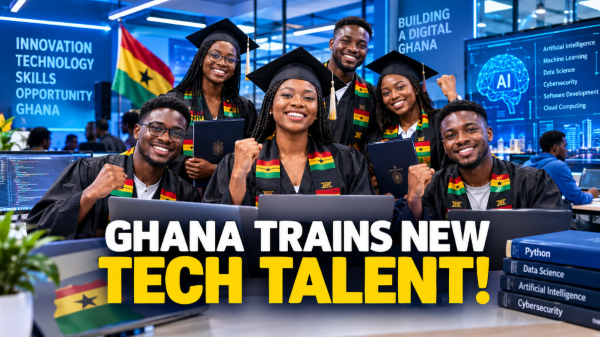
Ghana is strengthening efforts to prepare young people for the digital economy as 26 young Ghanaians graduate from an intensive digital skills programme, with participants developing technology projects aimed at solving real problems in their communities.
The first cohort of Plan International Ghana’s Digital Skills Project completed 12 weeks of intensive training followed by a month of capstone project development.
The programme, funded by Nokia and implemented with partners including Next Gen Infraco, Intellas, the University for Development Studies and Ho Technical University, focused on equipping young people with practical skills for the rapidly changing technology sector.
DETAILS – Ghana Trains Young Digital Innovators as 26 Graduate
The 26 graduates comprising 14 females and 12 males did more than complete classroom training.
They developed five projects designed to address real challenges within their communities, demonstrating how digital education can move beyond theory into practical problem-solving.
The projects covered areas connected to emerging opportunities in Ghana’s digital economy, with participants gaining experience that could support future careers in technology, entrepreneurship and innovation.
One of the projects highlighted was AMBU, an emergency response application designed to assist with medical emergencies.
Three women were part of the team behind AMBU, providing an example of how increased female participation in technology can translate into solutions with potential social impact.
Sam George urges youth to embrace technology
Minister for Communication, Digital Technology and Innovations Samuel Nartey George used the graduation ceremony to encourage young people, particularly young women, to take their place in Ghana’s growing technology sector.
He said Ghana’s digital transformation requires young people who can build technology solutions rather than simply consume technology.
The Minister also urged the female graduates not to be discouraged by the perception that technology is a male-dominated field.
He encouraged them to pursue opportunities in areas including software development, cybersecurity, data analytics and artificial intelligence.
141,954 accounts already enrolled in One Million Coders
The development comes as government continues to expand its One Million Coders Programme, which is designed to provide coding and other digital skills to Ghanaians.
As of August 2026, the programme had recorded 141,954 registered accounts, with 27,782 learners actively engaged in studies and 5,812 course-completion records logged, according to information presented by the Communications Minister.
The programme offers training pathways in areas including cybersecurity, data analytics, artificial intelligence and other digital skills.
Government has also signed agreements with several universities to integrate relevant digital certifications into degree and diploma programmes.
Ghana targets a stronger digital workforce
The increasing focus on digital skills reflects the growing importance of technology to Ghana’s economic transformation.
Government has been pushing initiatives aimed at creating a workforce capable of taking advantage of opportunities in artificial intelligence, 5G, cybersecurity, software development and other emerging areas.
The Communications Ministry has also been engaging technology companies on creating pathways for people who complete digital training to transition into sustainable technology careers.
Recent discussions with Ericsson, for example, focused on opportunities to connect beneficiaries of the One Million Coders Programme with potential career pathways while also strengthening Ghana’s digital infrastructure.
More opportunities for Ghanaian youth
The graduation of the first cohort demonstrates the potential impact of programmes that combine digital education with practical project development.
Rather than simply earning certificates, participants were required to apply what they learned to real-world challenges.
That approach could become increasingly important as Ghana seeks to develop a technology workforce capable of creating businesses, developing digital products and solving problems in sectors such as healthcare, agriculture, finance and education.
Plan International Ghana’s Digital Skills Project is therefore part of a wider push to ensure that young Ghanaians are prepared not only to participate in the digital economy but also to help shape it.
Ghana Trains Young Digital Innovators as 26 Graduate – Key details at a glance
- 26 young Ghanaians completed the first cohort
- 14 females and 12 males graduated
- Training lasted 12 weeks
- Graduates spent an additional month developing projects
- Five community-focused projects were developed
- The programme was funded by Nokia
- Plan International Ghana implemented the programme with partners
- Government’s One Million Coders Programme had 141,954 registered accounts as of August
- Training opportunities include AI, cybersecurity and data analytics
Ghana’s digital future depends on skilled young people
As technology continues to transform industries around the world, Ghana’s ability to compete will increasingly depend on the skills of its workforce.
The graduation of these 26 young people offers a glimpse of what can happen when young Ghanaians receive access to practical technology training and opportunities to turn their knowledge into solutions.
With government and private-sector initiatives continuing to expand digital training, the country is positioning a new generation of young people to participate more actively in the technology-driven economy.
For Ghana’s youth, the message is increasingly clear: digital skills are becoming not just an advantage, but a pathway to jobs, entrepreneurship and innovation.
Other reportage: Ghana News Agency report on the One Million Coders Programme
Our tech news here