Security analyst Emmanuel Kutin has cautioned the Minority in Parliament against describing Ghana as a “cocaine economy,” warning that the label could damage the country’s international reputation and expose Ghanaians to more checks when they travel abroad.
Mr Kutin made the remarks on Channel One TV’s The Big Issue with Umaru Sanda Amadu on Saturday, November 14, 2026, two days after Minority MPs chanted “cocaine economy” in Parliament following the presentation of the 2027 Budget.
“I was not happy in Parliament when the Minority decided to term our economy as a cocaine economy,” he said, while stressing that the country’s growing cocaine problem must still be treated as a serious national issue.
Why the Minority chanted ‘cocaine economy’ after the 2027 Budget
Finance Minister Dr Cassiel Ato Forson presented the 2027 Budget Statement and Economic Policy to Parliament on Thursday, November 12, 2026.
As he ended the presentation, Minority MPs chanted “Cocaine!” and “Cocaine economy!” and held up placards. The messages included “scam government”, “Paper economy vs Pocket economy”, “Frakadam Aban” and “Ato, how much has Ghana made from cocaine?”
The Minority said the government had failed to tackle drug trafficking and protect the country’s borders. GhanaTrends earlier reported the Minority’s wider criticism of the budget, which it described as a ‘paper economy’.
Kutin: cocaine cartels are not Ghana’s economy
Mr Kutin said Ghana must confront the cocaine menace, but the whole economy should not be portrayed as driven by drug money.
He argued that the activities of private cartels or individuals should not be presented as the basis of the national economy.
He urged politicians to put the national interest first and warned against using cocaine seizures for political advantage. Opposition figures, he said, should not paint the country negatively simply because they are out of government, describing it as “an integrity issue.”
How the ‘cocaine economy’ label could affect Ghanaian travellers
According to Mr Kutin, labels like “cocaine economy” could lead to more surveillance and checks on Ghanaians travelling abroad.
His warning comes as several cocaine seizures abroad have been linked to shipments or passengers from Ghana in recent months.
Cocaine seizures linked to Ghana in 2026
The debate follows a string of drug cases tied to Ghana, as reported by Ghanaian media:
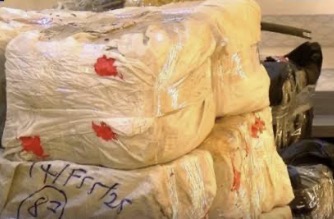
- Spain (announced November 11): About 2.6 tonnes (2,600kg) of cocaine hidden under false bottoms in wooden crates of coconuts, in two containers loaded at Tema Port on August 2 and arriving in Valencia on August 22.
- Arrests in Spain: Two men, described as the importer and the offloading supervisor, were arrested at a warehouse in Almería after investigators tracked the cargo.
- France (September): Almost 3.9 tonnes of cocaine seized at Dunkirk from a container sent from Ghana.
- Lebanon (October 31): A Syrian man arrested in Beirut with 46.7kg of cocaine on arrival from Accra.
- Ghana (November 11): A 43-year-old Tema freight forwarder detained by NACOC in connection with the Spain shipment, according to reports citing a NACOC source.
The Spanish Tax Agency and Civil Guard announced the coconut seizure on November 11, about three months after the operation began. 3News reported that NACOC has not issued a public statement on the Tema arrest and that the suspect has not been charged or named.
Political pressure over the drug seizures
The NPP has demanded the removal of the Interior Minister, the head of the Narcotics Control Commission (NACOC) and the head of Ghana Airports Company Limited over the seizures abroad.
Majority Leader James Agalga has said there will be no parliamentary inquiry into the matter.
What it means for Ghanaians
For ordinary Ghanaians, the concern raised by Mr Kutin is practical: a reputation for drug trafficking can mean tougher screening at foreign airports and ports.
Exporters using Tema Port and travellers passing through Kotoka International Airport could face closer scrutiny as foreign agencies watch cargo and passengers from Ghana more carefully.
What happens next
NACOC investigations into the Tema-linked shipment are continuing, with others connected to the consignment reportedly being pursued.
Debate on the 2027 Budget continues in Parliament, where the Minority is expected to keep pressing the government on drug trafficking and border security.
Key details at a glance
- Who: Security analyst Emmanuel Kutin
- What: Cautioned the Minority against calling Ghana a “cocaine economy”
- Where: Channel One TV’s The Big Issue, Saturday, November 14, 2026
- Trigger: Minority chants after the 2027 Budget presentation on November 12
- Concern: Damage to Ghana’s reputation and more checks on Ghanaian travellers
- Background: 2.6-tonne cocaine seizure in Spain from a Tema coconut shipment
- Status: NACOC has detained a Tema freight forwarder; no charges announced
FAQs
Why did the Minority call Ghana a ‘cocaine economy’?
Minority MPs chanted “cocaine economy” after the 2027 Budget presentation on November 12, accusing the government of failing to curb drug trafficking and protect Ghana’s borders after cocaine seizures abroad were linked to Ghana.
What did Emmanuel Kutin say about the ‘cocaine economy’ label?
He said the label could damage Ghana’s reputation and lead to more surveillance of Ghanaians travelling abroad, adding that the actions of drug cartels should not be presented as the basis of the economy.
How much cocaine did Spain seize from Ghana?
Spanish authorities seized about 2.6 tonnes of cocaine hidden in a coconut shipment loaded at Tema Port on August 2, 2026, and announced the operation on November 11.
Mr Kutin’s warning adds a new voice to the debate over Ghana’s cocaine problem: he agrees the menace is serious, but says calling the whole economy a “cocaine economy” risks hurting the country’s image and the Ghanaians who travel and trade abroad.