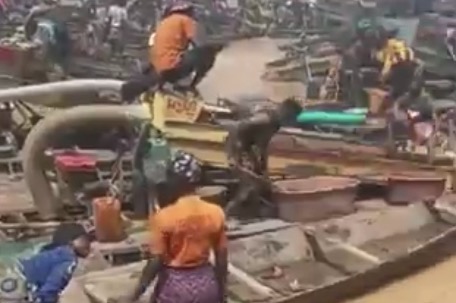
Recent observations have revealed that more individuals are actively involved in galamsey operations, scavenging and severely damaging vital water bodies and openly calling the site ‘Galamsey Market’
The sheer number of people participating in these illegal mining activities has raised serious concerns among environmentalists and local communities. The destruction of rivers, streams, and other water sources continues at an alarming rate despite repeated government promises to curb the menace.
Environmental Damage from Galamsey Reaches Critical Levels
The large-scale involvement in galamsey has led to heavy pollution of water resources with toxic chemicals and sediment. Experts warn that the continued destruction could have long-term consequences for agriculture, drinking water supply, and public health.
Many rivers that once served as lifelines for communities are now heavily degraded, forcing residents to rely on alternative and often unsafe water sources.
Why Galamsey Persists Despite Government Crackdowns
The persistence of galamsey, even with thousands of people involved, highlights the complex socio-economic factors driving the illegal activity. Poverty, lack of alternative livelihoods, and weak enforcement in remote areas are frequently cited as major reasons.
Environmental advocates are calling for more comprehensive strategies that combine enforcement with sustainable job creation to reduce dependence on illegal mining.
The situation has prompted renewed calls for decisive government intervention to protect the nation’s water bodies. Stakeholders are urging authorities to intensify monitoring, community engagement, and alternative livelihood programmes.
As the scale of destruction becomes more evident, there is growing pressure on the government to deliver lasting solutions to the galamsey crisis before irreversible damage is done to Ghana’s environment.
For more on environmental issues, read our report on [EPA’s non-confrontational approach to fighting illegal mining](https://ghanatrends.com