Ghana’s annual consumer inflation rose to 5.2% in September 2026, up from 5.0% in August, the Ghana Statistical Service (GSS) announced on Wednesday, October 7, 2026. It is the second straight monthly increase, driven mainly by a rebound in food prices.
Food inflation climbed to 4.0% from 3.0% in August, while non-food inflation eased to 6.2% from 6.8%. Prices rose 1.1% between August and September on a month-on-month basis.
Despite the uptick, the rate remains far below the 9.4% recorded in September 2025 and is still under the Bank of Ghana’s medium-term target band of 8% plus or minus 2%.
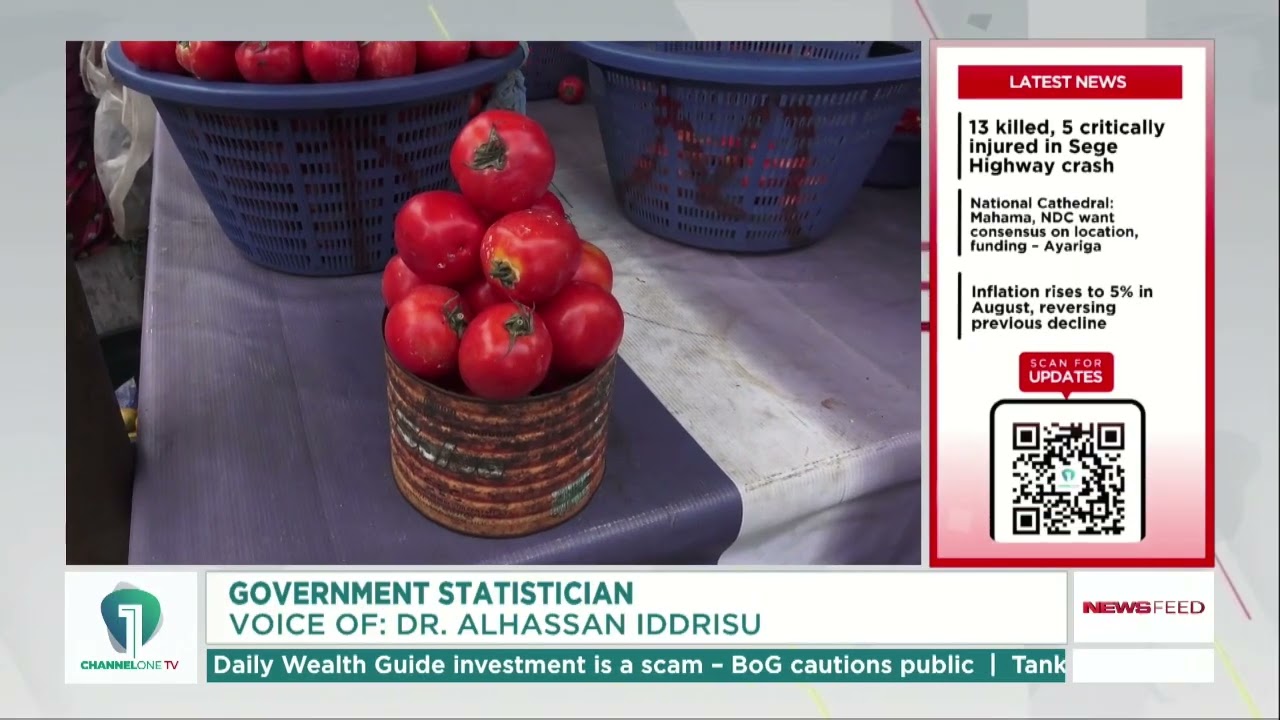
Government Statistician Dr Alhassan Iddrisu presented the figures in Accra, noting that inflation remained below the lower bound of the central bank’s target band.
Ghana inflation rises to 5.2% for second straight month
The September figure extends an upward turn that began in August. Inflation had dropped to 4.6% in July from 5.3% in June, before rising to 5.0% in August.
The 0.2 percentage-point rise in September is small, but it confirms that the steep disinflation seen over the past year has slowed.
- June 2026: 5.3%
- July 2026: 4.6%
- August 2026: 5.0%
- September 2026: 5.2%
- September 2025: 9.4%
Food inflation jumps to 4.0% as tomato prices soar
Food prices were the main driver of the increase. Food inflation rose a full percentage point, and food prices went up 1.5% month-on-month in September after falling 2.6% in August.
According to the GSS, fresh tomatoes recorded the steepest year-on-year price increase at 153.4%, followed by ginger at 100.4% and shrimps at 62.8%.
Other items pushing prices up included rent, cooked rice, bus and trotro fares, yam and imported beer.
Some items became cheaper. Lime prices fell 29.9%, maize dropped 26.4% and foreign apples were down 24.1%.
Non-food, goods and services inflation in September
Non-food inflation continued to ease, falling to 6.2% from 6.8% in August. Non-food items still account for the larger share of overall inflation, at about 63%.
- Food inflation: 4.0% (August: 3.0%)
- Non-food inflation: 6.2% (August: 6.8%)
- Goods inflation: 4.2% (August: 3.8%)
- Services inflation: 8.3% (August: 8.6%)
- Housing and utilities: 10.3%, the highest of all divisions (down from 11.6%)
Local vs imported inflation
Inflation for locally produced items stood at 6.4%, well above the 2.4% recorded for imported items. Local goods make up 85.7% of the consumer basket, which means domestic price pressures are doing most of the work.
Ashanti records highest regional inflation at 9.8%
Ashanti Region recorded the highest inflation rate at 9.8%, while Western Region had the lowest at -0.5%, meaning prices there were slightly lower than a year ago.
Four regions recorded rates above the national average of 5.2%. Ashanti and Greater Accra together accounted for 56.6% of the national inflation rate.
What September inflation means for Ghanaian households
For consumers, the figures mean everyday food items, especially tomatoes, are costing noticeably more at the market. Rising rent and transport fares are also adding pressure on household budgets.
However, at 5.2%, overall price growth remains low compared with a year ago, when inflation was close to double digits. Readers can compare this with recent cost trends in our report on building cost inflation in August 2026.
What happens next for inflation and interest rates
The Bank of Ghana has held its policy rate at 14% since March 2026, citing risks to inflation from the conflict in the Middle East. The latest figures will feed into the central bank’s next policy decision.
The GSS will release October 2026 inflation data next month. Analysts will watch whether food prices keep rising and whether recent fuel price increases filter through to transport and other costs.
Key details at a glance
- September 2026 inflation: 5.2%, up from 5.0% in August
- Second consecutive monthly increase after 4.6% in July
- Food inflation: 4.0%; non-food inflation: 6.2%
- Month-on-month inflation: 1.1%
- Fresh tomatoes up 153.4% year-on-year
- Highest region: Ashanti (9.8%); lowest: Western (-0.5%)
- Bank of Ghana policy rate: 14%
FAQs
What is Ghana’s inflation rate for September 2026?
Ghana’s annual inflation rate for September 2026 is 5.2%, up from 5.0% in August, according to the Ghana Statistical Service.
Why did inflation increase in Ghana in September 2026?
The rise was driven mainly by food prices, with food inflation climbing to 4.0% from 3.0%. Fresh tomatoes, ginger and shrimps recorded the sharpest price increases.
Which region has the highest inflation in Ghana?
Ashanti Region recorded the highest inflation in September 2026 at 9.8%, while Western Region recorded the lowest at -0.5%.
Ghana’s inflation has edged up to 5.2% in September 2026, its second monthly rise, as food prices rebounded sharply. While the rate is still low by historical standards and below the Bank of Ghana’s target band, rising tomato, rent and transport costs show that price pressures are building again. Full data is available from the Ghana Statistical Service.