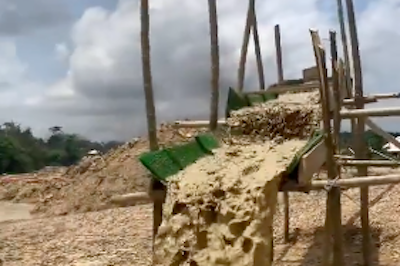
Residents in the Manso community of Ghana’s Ashanti Region are raising alarms over rampant illegal galamsey mining taking place in broad daylight.
A widely shared video captured makeshift sluice structures processing ore slurry on heavily excavated land, highlighting the scale of environmental destruction from these unregulated activities. Locals report that complaints to police have gone unheeded, with claims that the operation enjoys protection because it belongs to a powerful politician.
The footage has prompted direct appeals to President John Dramani Mahama to intervene and enforce laws without fear or favour. Despite government reclamation efforts in areas like Manso Nyankomanse, critics argue that selective enforcement continues to undermine anti-galamsey initiatives. The destruction of forests, farmlands, and water bodies in the region threatens local agriculture and public health through heavy metal pollution.
VIDEO: Mahama Urged to Crack Down on Galamsey in Manso as Environmental Crisis Worsens
Let’s help in our own small way to fix Ghana! Dear @JDMahama FYA. https://t.co/btG7RSELAE
— GhanaTrends.com (@GhanaTrendsInc) May 3, 2026
Why Galamsey Persists in Ghana Despite Repeated Government Promises
Galamsey, or illegal small-scale gold mining, remains a deeply entrenched challenge across Ghana, often linked to influential figures from various political backgrounds. Residents express frustration that laws appear to protect the powerful while ordinary citizens bear the brunt of degraded landscapes and contaminated rivers. Calls for stronger action, including better monitoring and prosecution of kingpins, continue to grow louder on social media and in affected communities.
Community members who reported the Manso site say they were allegedly told the mining belongs to a politician, raising serious questions about equal application of the law. This incident adds to ongoing national debates about the effectiveness of current strategies against galamsey and the need for transparent, decisive leadership to safeguard Ghana’s natural resources for future generations.
For more read our report on THE TRENDS