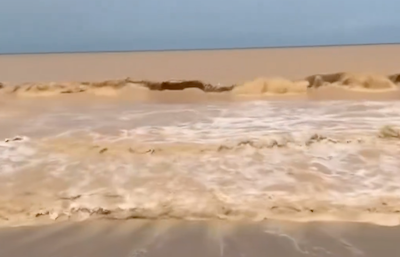
A disturbing video from Anlo Beach in Ghana’s Western Region is making waves across social media, showing powerful ocean surges carrying thick, chocolate-brown sediment right onto the shoreline.
What was once a picturesque coastal stretch popular with locals and visitors now resembles a polluted river mouth, with the water heavily laden with silt and mining waste. Residents and environmental observers point directly to upstream activities as the culprit behind this dramatic change in the sea’s appearance.
The brown discoloration stems from illegal small-scale gold mining, commonly known as galamsey, operating along the Pra River. These unregulated operations release massive amounts of sediment, chemicals, and tailings into the river system, which then flows downstream and empties into the Atlantic at the coast near Shama. Years of unchecked activity have transformed the Pra River from a vital waterway into a major pollution conduit, carrying the visible fallout straight to Anlo Beach and surrounding waters.
Video of the Galamsey Pollution of Anlo Beach: It is Getting Worse!
😡Ei Ghana, so we are just watching and doing nothing???! No no no!pic.twitter.com/zb8pfetJGF
— GhanaTrends.com (@GhanaTrendsInc) April 27, 2026
Local fishermen report catastrophic losses, with fish populations plummeting and entire catches rendered unusable due to the contaminated environment. The sediment not only smothers marine habitats but also introduces harmful substances that disrupt the entire coastal ecosystem, threatening food security and the economic survival of entire communities dependent on the sea. Many families who have fished these waters for generations now face an uncertain future as their traditional livelihood slips away.
Public outrage continues to build, with growing calls for authorities to enforce stricter measures against galamsey operators and restore the Pra River’s health before further irreversible damage occurs. While some online skeptics question whether the footage is recent, independent accounts from the area confirm the pollution remains a persistent problem. For more on related environmental challenges, see Environmental Trends