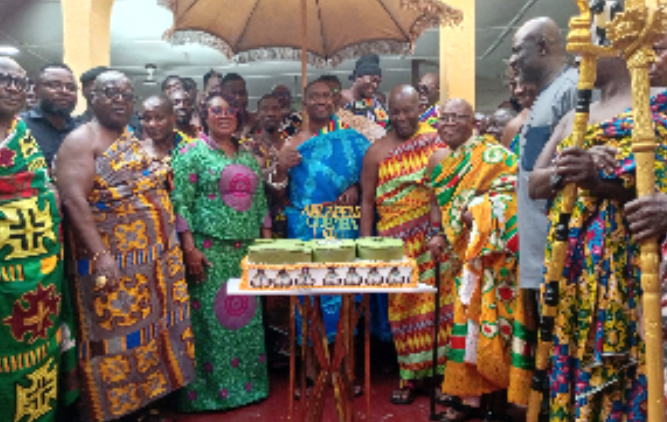
The people of Akuapem in Ghana’s Eastern Region have marked 200 years since their victory over the Ashanti Empire at the Battle of Katamanso, fought on August 7, 1826, with a two-week bicentennial Odwira festival that began on September 21, 2026, the Associated Press reported on Sunday, October 4.
The celebrations, held under the theme “200 Years of Odwira: Honouring Our Heritage, Securing Our Future,” drew chiefs, queen mothers, citizens and visitors to Akropong, the traditional capital, and Larteh, where young men staged a reenactment of the historic battle.
The Odwira festival was first held in 1826 following the Katamanso victory. It is observed as a period of purification, thanksgiving and the honouring of ancestors, and also marks the new yam harvest.
The Okuapehene, Oseadeeyo Kwasi Akuffo III, formally announced the bicentennial programme in February 2026, with an official launch on March 5, 2026.
Akuapem Odwira 2026 celebrates 200 years since Katamanso
According to the AP, participants wore Kente cloth and gold ornaments as drummers and dancers filled the streets. Chiefs arrived at the ceremonies on decorated palanquins.
The official state ceremony with chiefs and queen mothers took place in Akropong on September 25, according to AP photo coverage. Among those present was Osabarima Asiedu Okoo Ababio III, the Benkumhene of the Akuapem Traditional Area.
Katamanso battle reenactment staged in Larteh
On the festival’s tenth day, September 30, young men dressed as warriors marched from the palace into the hills and forest to reenact the battle, known locally as the Akatamanso War.
Some participants played captured enemy soldiers. They were chained and led back to the community to be presented to the chief, recreating the outcome of the 1826 battle.
What happened at the Battle of Katamanso in 1826
The Battle of Katamanso, also called the Battle of Dodowa, was fought in the Pinkwai Forest near present-day Dodowa. It pitted the Asante Empire against a coalition of coastal and southern states supported by British military advisers, firearms and artillery.
The coalition repelled the Asante invasion, forcing a retreat northward. Historians say the result halted Asante expansion toward the coast and strengthened British influence in the Gold Coast.
Coalition members named in historical accounts include:
- Ga-Adangbe
- Fante
- Akuapem
- Denkyira and Wassa
- Ningo, Krobo and Ada
A peace treaty negotiated by Captain George Maclean in 1831 later reduced hostilities in the region.
Okuapehene and Okyehene call for unity at Odwira bicentennial
Speaking at the Akropong durbar, the Okuapehene said Odwira provided an opportunity for sons and daughters of Akuapem to return home, strengthen family ties and contribute to community development, the Ghana News Agency reported.
He urged citizens to “wash away the filth of the past” and called on the five traditional divisions to “rally behind the traditional authority.” He also called for differences in the Okere area to be resolved.
The Okyehene, Osagyefuo Amoatia Ofori Panin, said the history, origins and cultural identity of a people could not be separated from their heritage, and encouraged citizens abroad to return and support the area’s development.
What Odwira at 200 means for Akuapem communities
Nanahemaa Adwoa Awindor, the queen mother overseeing developmental activities, told the AP: “Two hundred years of Odwira represents far more than the passage of time. It is a remarkable testimony to the resilience of the people, the continuity of tradition, and the enduring power of culture to bind generations together.”
Kingsley Ketegu, a 36-year-old resident who took part, urged young people to embrace the tradition. “As young people, we should embrace this and learn our culture. Odwira is a very big festival. Very, very big,” he said.
The bicentennial programme announced in February also included public lectures, a school quiz on Odwira, a temporary Odwira museum, tree planting and the launch of an Akuapem endowment fund. The Akuapem Ridge, home to sites such as the Anagkazo Campus in Mampong-Akuapem, continues to attract visitors during the festive season.
What happens next
Celebrations continue beyond Akropong. Nsawam, also in the Eastern Region, launched its own 200th anniversary Odwira programme in September, with activities planned for December under the local theme “A New Dawn for Nsawam.”
Nsawam’s programme includes two legacy projects: a Skills Development Centre and an Arts and Cultural Village.
Key details at a glance
- Event: 200th anniversary Akuapem Odwira festival
- Commemorates: Battle of Katamanso (Dodowa), August 7, 1826
- Festival start: September 21, 2026, running about two weeks
- State ceremony: Akropong, September 25
- Battle reenactment: Larteh, September 30
- Theme: “200 Years of Odwira: Honouring Our Heritage, Securing Our Future”
- Host: Okuapehene Oseadeeyo Kwasi Akuffo III
FAQs
What is the Akuapem Odwira festival?
Odwira is the annual festival of the Akuapem people, marking purification, thanksgiving, the honouring of ancestors and the new yam harvest. It also commemorates the 1826 victory over the Ashanti army.
When was the Battle of Katamanso fought?
The Battle of Katamanso, also known as the Battle of Dodowa, was fought on August 7, 1826, near present-day Dodowa.
Why is Odwira 2026 special?
The 2026 festival marks 200 years since the first Odwira was held after the Katamanso victory, making it the bicentennial celebration.
The 200th Akuapem Odwira festival has brought Akropong and Larteh together to honour the 1826 Katamanso victory with ceremonies, a battle reenactment and calls for unity, as Nsawam prepares its own bicentennial celebrations in December.