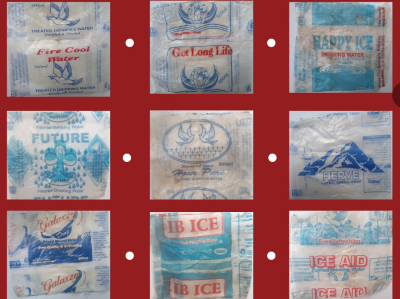
An investigation into sachet water production in Ghana’s Greater Accra Region found that 144 sachet water brands were operating without valid Food and Drugs Authority (FDA) registration or licenses, raising concerns about the safety of a product consumed daily by millions of Ghanaians.
The investigation, conducted by The Fourth Estate in 2023, involved collecting 300 sachet water brands from markets and transport stations across Greater Accra and cross-checking them against registration information supplied by the FDA.
The findings showed that 142 of the 300 sampled brands were not registered with the FDA, while two additional brands could not be confirmed as registered, bringing the total number of unregistered brands identified in the investigation to 144.
The findings have gained renewed relevance as Ghana continues to depend heavily on sachet water, with UNICEF warning in 2026 that reliance on sachet water is creating significant health and economic costs for households and children.
Here’s How the 144 Sachet Water Brands in Accra Found Without FDA Licenses were identified
The Fourth Estate said it obtained a list of registered sachet water brands in Greater Accra from the FDA and then visited several busy markets and transport locations to collect samples.
The locations included Madina, Dodowa, Oyibi, Tema Community One, Ashaiman, Accra Central, Agbogbloshie and Kaneshie.
Out of the 300 brands collected, 142 could not be matched with the FDA’s registered brands list. Two other brands were also not confirmed by the FDA or found on its published list.
The investigation therefore identified 144 brands that were not registered according to the information available to the investigators at the time.
This distinction is important because the investigation dates back to 2022–2023. It should not be interpreted as evidence that all 144 brands remain unlicensed today.
List of the 144 Sachet Water Brands in Accra Found Without FDA Licenses
List of the 144 Sachet water without licenses can be found here. Some producers had expired licences
Sachet water is the primary source of drinking water for millions of Ghanaians, and many rely on it to prepare food because of unreliable tap water.
But an investigation found 144 sachet water brands in Greater Accra operating without FDA licences.
At the time, the Vice… pic.twitter.com/5MFoalddW6
— The Fourth Estate (@fourthestategh) September 22, 2026
The investigation also found that the problem was not limited to businesses that had never registered.
According to Richard Abotsivia, then Vice President of the National Association of Sachet and Packaged Water Producers, some producers had previously obtained FDA licences but failed to renew them.
The investigation identified 27 of the 144 brands as having licences that had expired while production was reportedly continuing.
The FDA had also told The Fourth Estate that some producers operated from locations that were difficult for regulators to identify, with some allegedly producing at night.
Hygiene concerns found at some production sites
The investigation went beyond checking registration records and visited a number of production facilities.
At some locations, journalists documented conditions they described as unhygienic, including production close to open drains and public toilets, inadequate production environments and poor handling practices.
One facility visited in Ashaiman was producing sachet water beside a dusty road, while another was operating from a small room in a residential setting.
The investigation also found examples of brands carrying FDA numbers or claims that could not be matched with valid registration information supplied by the regulator.
These findings do not mean that all sachet water produced in Ghana is unsafe. Rather, they demonstrate the importance of consumers being able to distinguish between properly regulated products and those operating outside the regulatory system.
FDA shut down one company after the investigation
The investigation prompted enforcement action.
In July 2023, the FDA announced that it had closed down Samdoe Enterprise, a sachet water producer operating around Spintex Road in Community 18, Accra.
The FDA said the company was producing and distributing unregistered water brands from an unlicensed and unhygienic facility.
The authority reported finding an unsuitable wooden structure, open drains with algae and fungi, dirty filters and inadequate pest-control measures.
The FDA subsequently warned consumers to stop patronising three brands associated with the facility and asked retailers and distributors to withdraw them from the market.
The case demonstrated that investigative reporting could trigger regulatory action against individual producers.
Why sachet water remains a major issue in Ghana
The issue has become even more significant because sachet water remains a major source of drinking water for Ghanaian households.
In a June 2026 publication, UNICEF Ghana said sachet water is now the main source of drinking water for more than one in three households in Ghana, with reliance particularly significant in urban areas.
UNICEF said households often turn to sachet water because public water services can be unreliable, piped connections may be considered expensive or inaccessible, and many consumers perceive sachet water as safer.
The organisation warned that dependence on sachet water carries health and economic consequences, particularly when water is contaminated or improperly handled.
UNICEF estimates that Ghana incurs about GH¢3.9 billion annually in public-health costs associated with sachet-water dependence, including costs linked to waterborne illness and premature deaths.
UNICEF says water contamination remains a wider concern
The sachet-water debate also sits within a broader national water-safety challenge.
UNICEF Ghana currently reports that 76 percent of households in Ghana are at risk of drinking water contaminated with faecal matter.
The organisation says only a small proportion of households treat their water appropriately before drinking.
This does not mean that 76 percent of households are necessarily drinking contaminated sachet water. The statistic covers household drinking-water sources more broadly.
However, it highlights why proper regulation, safe production, storage and handling of drinking water remain important public-health issues.
What consumers can do
Consumers buying sachet water can take several basic precautions.
One of the most important is checking whether the product carries the relevant regulatory information and whether the brand can be verified through the FDA’s public product registry.
The FDA’s online product-search system states that if a search returns no result, the product is either not registered or its registration validity period has expired.
Consumers should also pay attention to the condition of the packaging and avoid products with damaged, leaking or poorly sealed sachets.
Where a consumer suspects that a water brand is being produced or sold illegally, the matter can be reported to the FDA for investigation.
The bigger question for Ghana
The 144-brand finding is now more than three years old, but the underlying issue remains relevant because Ghana continues to rely heavily on packaged water.
The key question is therefore not simply how many unlicensed brands were identified in 2023, but how effectively Ghana’s regulatory system can continuously identify, shut down or bring non-compliant producers into compliance.
The FDA has continued to carry out enforcement operations against businesses operating without required licences and permits. In a 2026 enforcement update, the Authority said its Food Inspectorate and Enforcement Directorate had conducted nationwide operations targeting unlicensed manufacturing facilities and unregistered food products.
For consumers, the message is straightforward: sachet water remains an important source of drinking water, but registration, hygiene and proper handling matter just as much as affordability and accessibility.
The 144 brands identified in the earlier investigation therefore remain a powerful reminder of why consumers, producers and regulators all have a role to play in keeping drinking water safe.
Here Are the 144 Sachet Water Brands in Accra Found Without FDA Licenses – Key details at a glance
- 144: Unregistered sachet water brands identified in the 2023 investigation.
- 300: Sachet water brands sampled across Greater Accra.
- 142: Brands that could not be matched with the FDA’s registration list.
- 27: Brands among the 144 whose licences had reportedly expired.
- 2023: Year The Fourth Estate published the investigation.
- One company: Samdoe Enterprise was subsequently shut down by the FDA.
- 2026: UNICEF continues to highlight Ghana’s dependence on sachet water and water-safety challenges.
- GH¢3.9bn: UNICEF’s estimated annual public-health cost associated with sachet-water dependence.
Frequently Asked Questions
Are the 144 sachet water brands still operating today?
The 144 figure comes from a 2023 investigation and should not be interpreted as a current list of brands still operating without licences. Some may have subsequently registered, renewed their licences or stopped operating.
How many sachet water brands were tested?
The Fourth Estate collected and checked 300 sachet water brands from markets and transport locations across Greater Accra. Of these, 142 were not found on the FDA’s registration list, with two additional brands not confirmed, resulting in 144 identified as unregistered in the investigation.
How can I check if sachet water is FDA registered?
Consumers can use the FDA’s online Products Registry to search for a product. The FDA says that when a search produces no result, the product is either not registered or its registration has expired.
Is all sachet water in Ghana unsafe?
No. The investigation identified specific brands and production practices that raised regulatory and hygiene concerns. It does not establish that all sachet water in Ghana is unsafe. Consumers should check registration, packaging and product condition.
Ghana’s continued reliance on sachet water makes effective regulation particularly important. As the country works toward expanding access to safely managed piped water, the safety of packaged drinking water will remain a major public-health issue.
More at Fourth Estate: The Fourth Estate investigation
Also at UNICEF: UNICEF Ghana — Sachet Water and Child Health